Comics as a gateway to reading -study
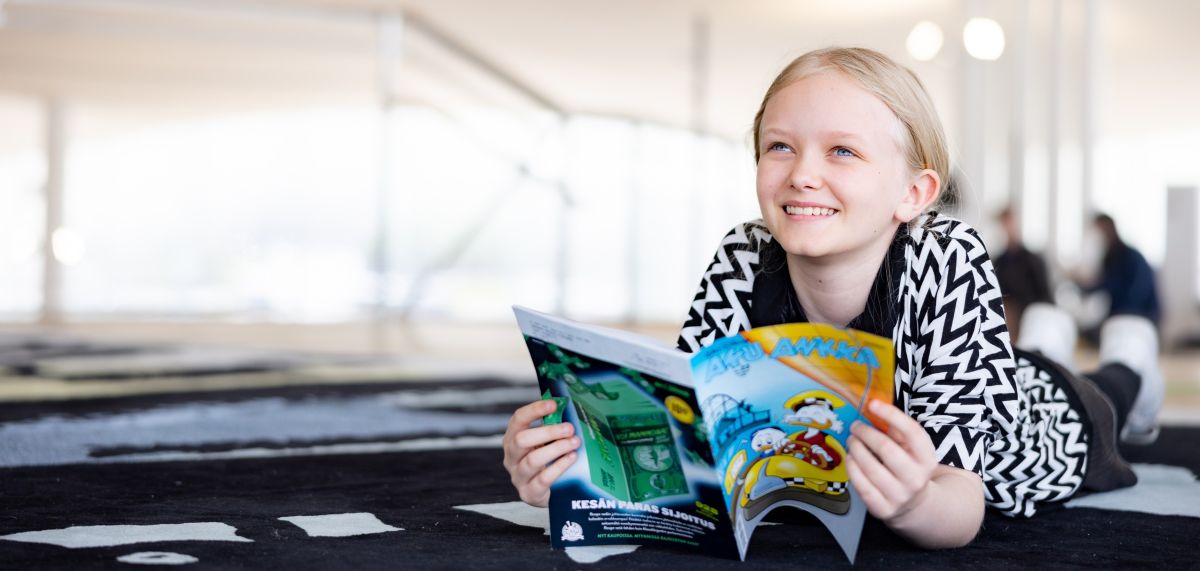
Photo: Samuli Pulkkinen / Sanoma
Finnish and Swedish-language third grades in the City of Helsinki will participate in the study. The classes have been randomly drawn into two groups: experimental and control classes.
Students in the experimental classes will receive an Aku Ankka comic book at home weekly from February to April, and students in the control classes will receive their comic books weekly from June to August. Students at Swedish-language schools will receive Kalle Anka comic books. Sanoma Media Finland and Egmont Story House AB deliver the magazines.
Students can also participate in the study if they already receive Aku Ankka/Kalle Anka at home. In this case, the student will receive the monthly Aku Ankka Klassikko/Kalle Anka Klassiker comic books for three months.
The subscription period is free for families and ends after the three-month period. The contact information obtained in the study will not be used for marketing.
The research process
The research is part of the City of Helsinki's main aim at supporting the literacy of children and young people. In the study, students will participate in a literacy assessment in January and May. Also guardians will complete a short survey in January and May.
All third grade students complete the literacy assessment tasks as part of the school's regular activities, but only the results of those students who participate in the study will be used for research purposes. Teachers will not be informed, which students will participate in the study.
The study collects information from students, guardians and teachers, and combines these with register data at Statistics Finland. In the data used in the analyses, direct personal data has been removed or changed to numerical identifiers from which individual persons cannot be identified. The data collected, their processing and storage are described in detail in the privacy policy (link below). The results of the study are always reported in such a way that individuals, classes or schools cannot be identified.
Read more about the study:
Other privacy notices:
- Two-year pre-primary education trial 2021-2024 (Ministry of Education and Culture)
- Study on reading skills in the second grade (in Finnish)
Delivery of comic books:
- Sanoma Media Finland: Privacy notice (in Finnish) / Egmont Story House AB: Skydd av personuppgifter och villkor (på Svenska) (Note! Contact information will not be used for marketing, analysis, statistics or profiling. The contact information will only be used to deliver the Aku Ankka / Kalle Anka comic books.)
More information about the study: sarjakuvatutkimus@jyu.fi
Materials for parents
We have gathered more information and tips on the pages below to support reading. We wish you a pleasant time reading together!