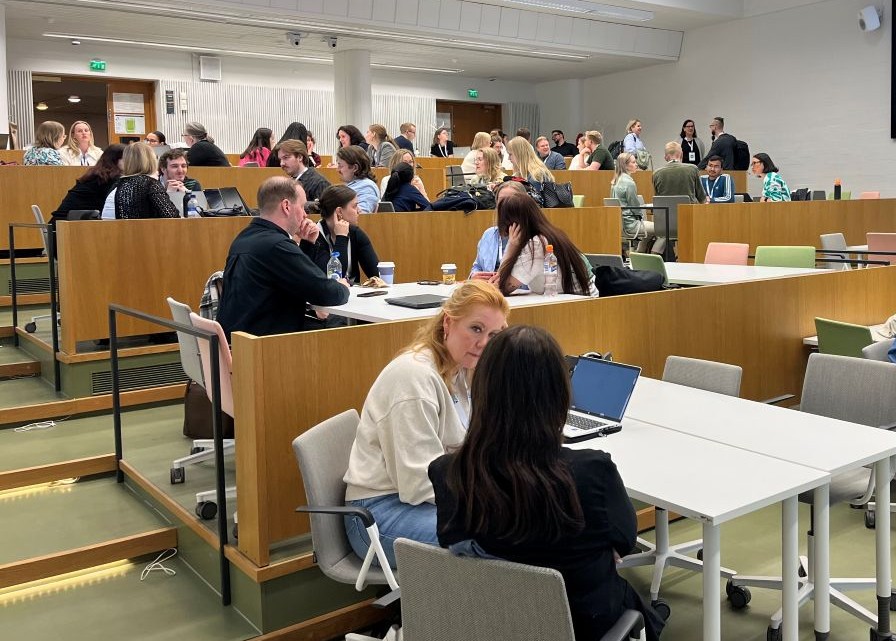
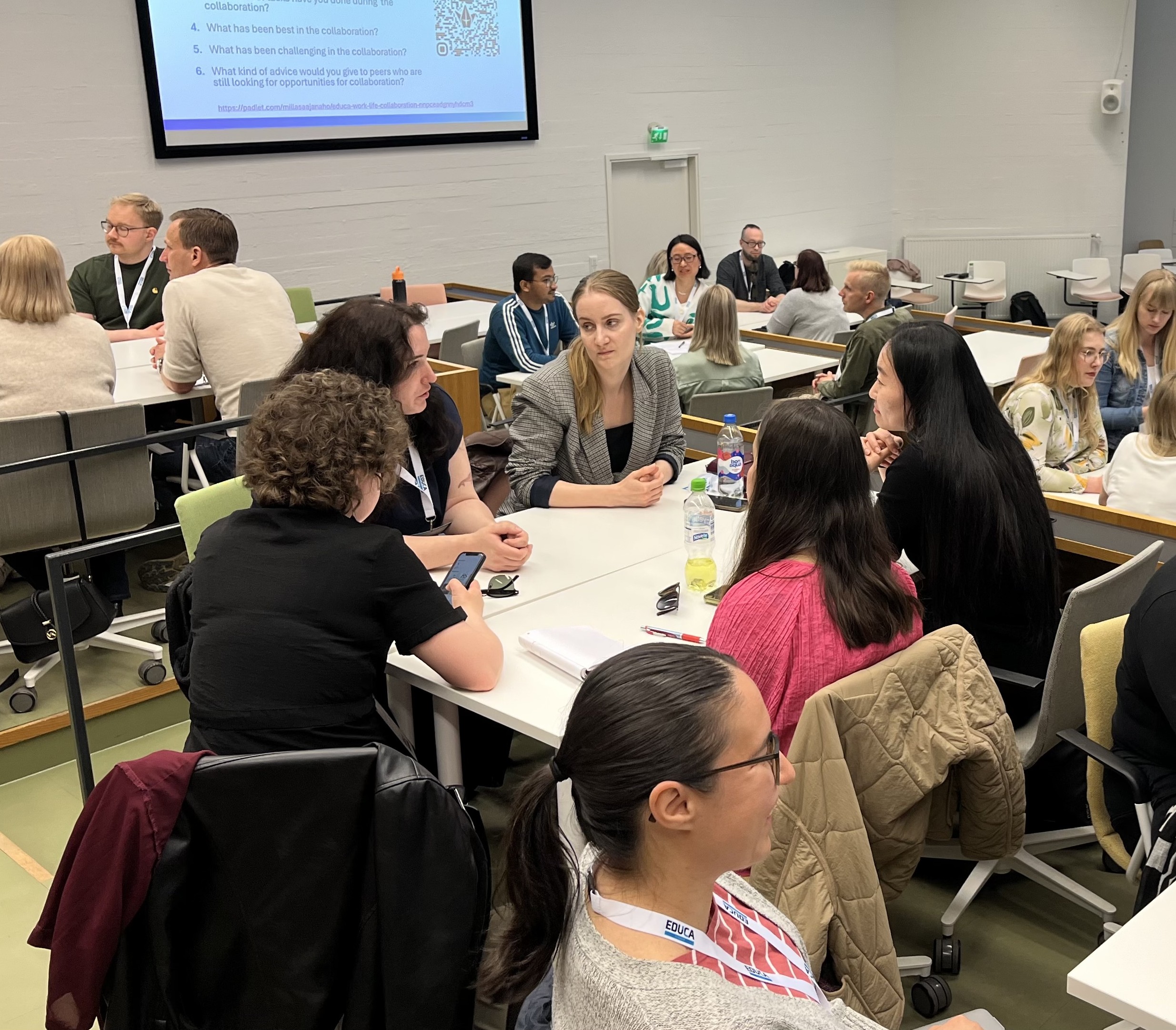
EDUCA-Doc career day kicked off the EDUCA Conference at Aalto University
EDUCA-Doc Doctoral Education Pilot is part of the national doctoral education pilot in Finland (2024-2027). Nationally, altogether 1000 new doctors will be trained in different doctoral education pilots, funded by the Finnish Ministry of Education and Culture. A total of 78 doctoral researchers will work within the EDUCA-Doc Doctoral Education Pilot in universities across Finland.
The national aim is to develop new practices of doctoral education and enable more mobility for doctoral graduates between universities, businesses, research institutes and other organisations and encourage them to pursue diverse research careers.
Among the stakeholders in the EDUCA-Doc pilot, the Finnish Institute of Occupational Health, the Finnish National Agency for Education, and the deep tech company Headai were represented at the EDUCA-Doc event. In addition, attendees heard from doctoral researcher Jukka Mäkinen about his work-life collaboration with the U16/U18 national youth ice hockey team, as well as career stories from both the defense industry and private entrepreneurship.
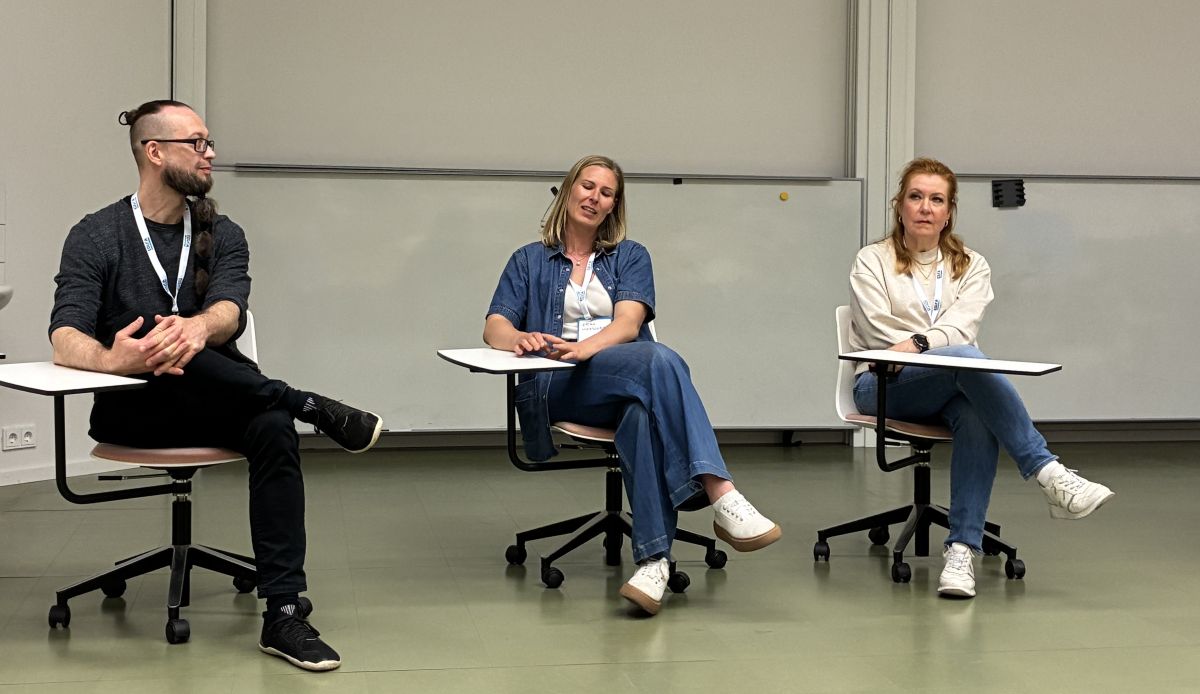
The panel discussion featured Harri Ketamo, CEO of the deep tech company Headai; Erika Maksniemi, Ph.D. in Educational Psychology; and Salla Toppinen-Tanner, Professor of Practice at the University of Jyväskylä.
Find your match
During the panel discussion, there was a consensus that the most important factor for career development is to pursue one’s own interests. Indeed, a key objective of the doctoral education pilot is to ensure that doctoral graduates find employment across a wide range of sectors in society.
According to the panelists, artificial intelligence will not diminish the importance of a doctoral degree in the future job market. The ability to think analytically is one of the most important professional skills.
"Instead, someone with a doctoral degree is well-equipped to make use of various tools, such as AI. It can help with the basics, but human intelligence is still needed for a deeper understanding", noted Salla Toppinen-Tanner, Professor of Practice at the University of Jyväskylä and the Finnish Institute of Occupational Health.
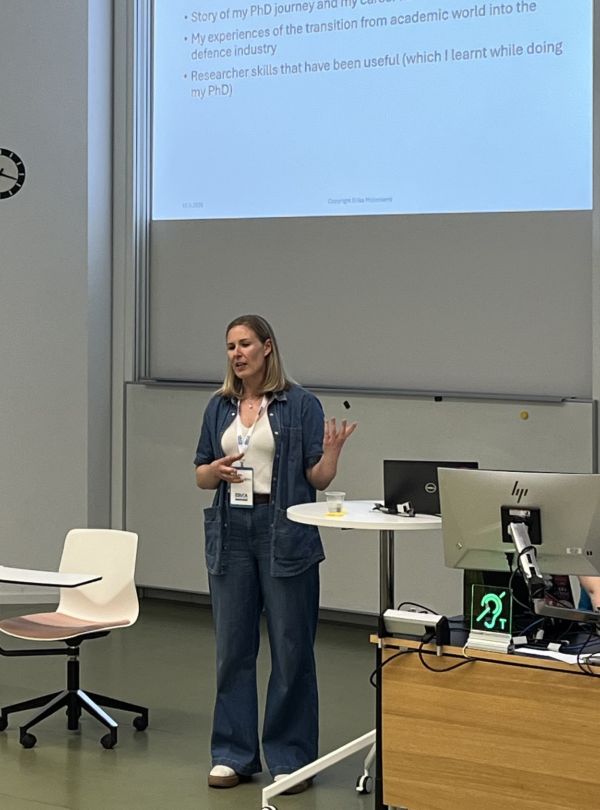
The title of PhD Erika Maksniemi’s presentation was: Is there life after a PhD? What kind of life is it?
Erika Maksniemi, a PhD who joined the defense industry and technology company Patria after completing her doctoral research in educational psychology, noted that as a PhD, her task in the team is to continuously ask “Why?”.
"In your PhD thesis you have to go in depth in a specific topic. However, in the work life the topic of your PhD thesis doesn't matter, but the skills gained when doing it: ability to evaluate knowledge, critical thinking, gaining information in a systematic way, teamwork, and communication skills.
"In working life, the topic of your dissertation is unlikely to matter; what matters instead are the skills you acquired while doing your research: the ability to evaluate information, critical thinking, systematic research, teamwork, and communication skills."
Harri Ketamo, CEO of the deep tech company Headai, also confirmed that the ability to simplify complex issues for others is a superpower that is essential in any field of work.
"Trained ability for critical thinking, what especially PhDs have, is valued both in start-ups and corporations!"
Read more about the EDUCA Doctoral Education Pilot