
The Teachers’ Occupational Wellbeing Study: Time Series (Spring 2025)
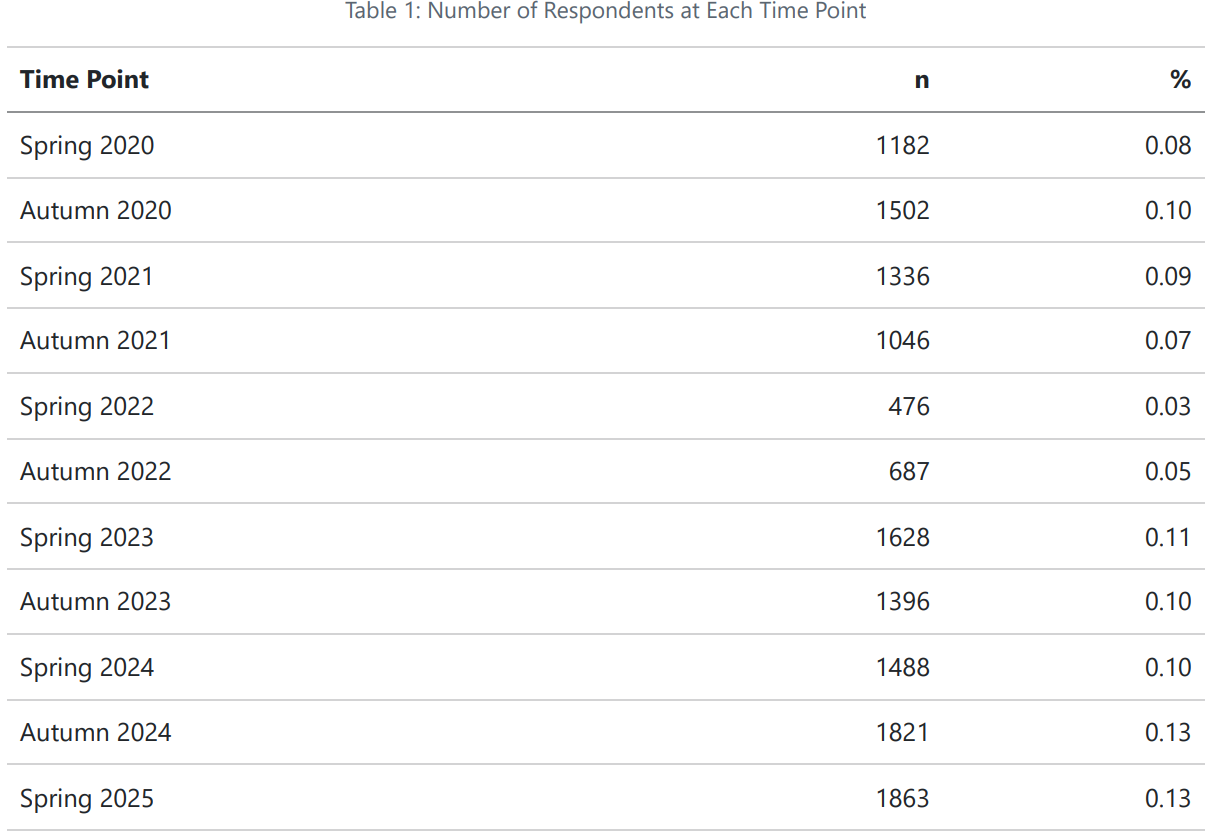
The results presented in this report are based on a teacher occupational well-being survey launched in Finland during the first spring of the C OVID-19 pandemic in 2020. Since then, data collection has continued biannually, taking place at the end of both the spring and autumn terms.
Further information about the research project is available on the EDUCA Flagship Programme website and on Zenodo. The project, dataset, and findings can be cited using the following DOI: https://doi.org/10.5281/zenodo.13467024.
After presenting the basic background information, the report introduces the development of work engagement and burnout through time series, followed by more detailed analyses of these key indicators. Thereafter, time series trends are presented for other central aspects and indicators of teacher occupational well-being, including basic psychological needs, meaning of work, recovery from work, illegitimate tasks, workload-related stress, and turnover intentions.
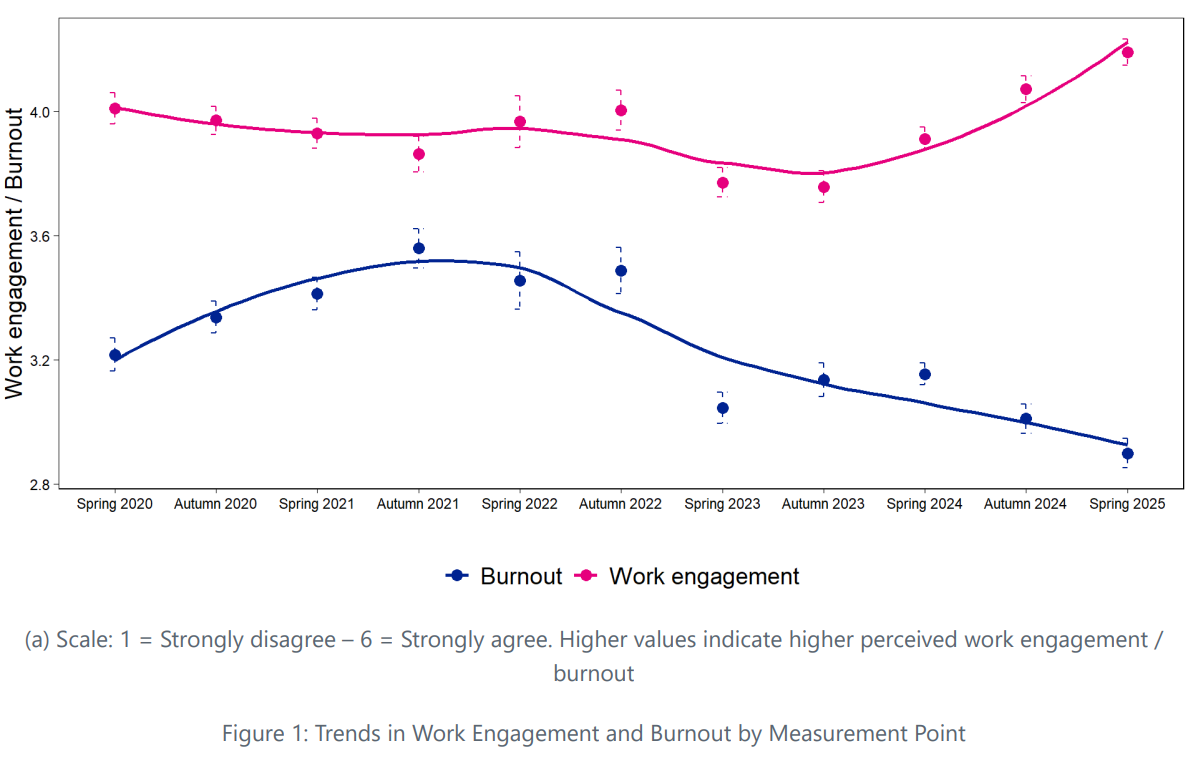
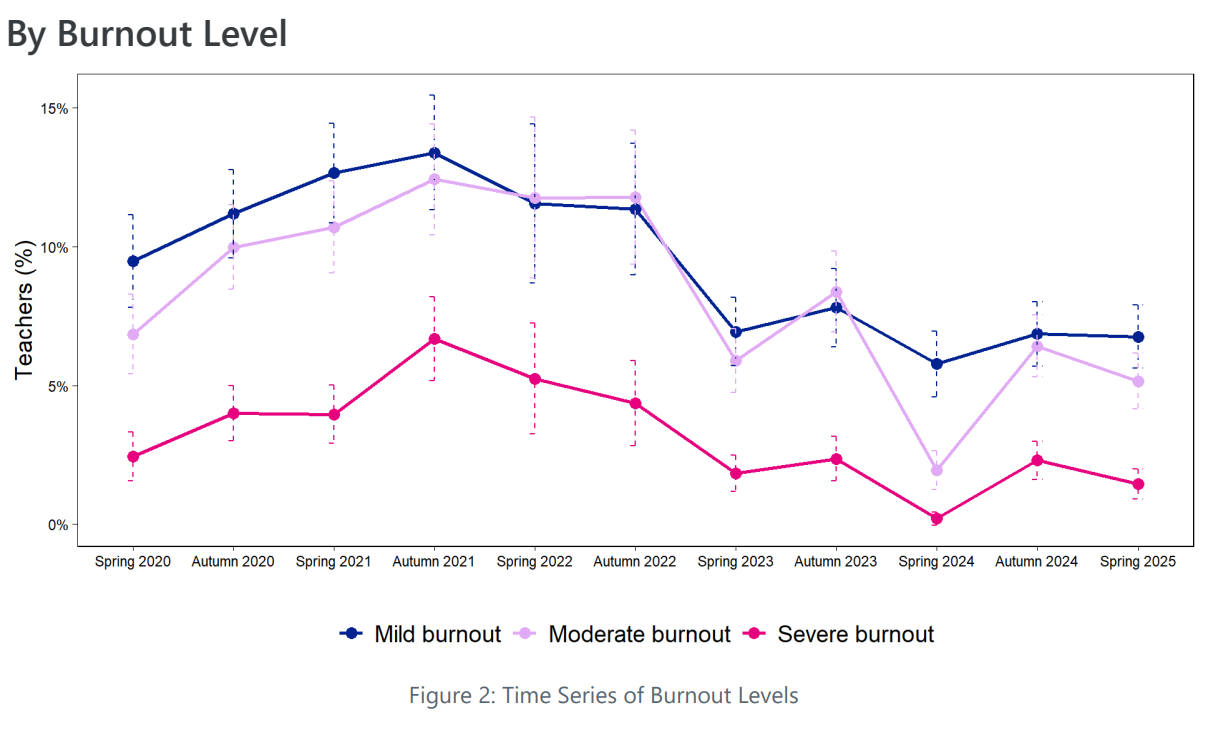
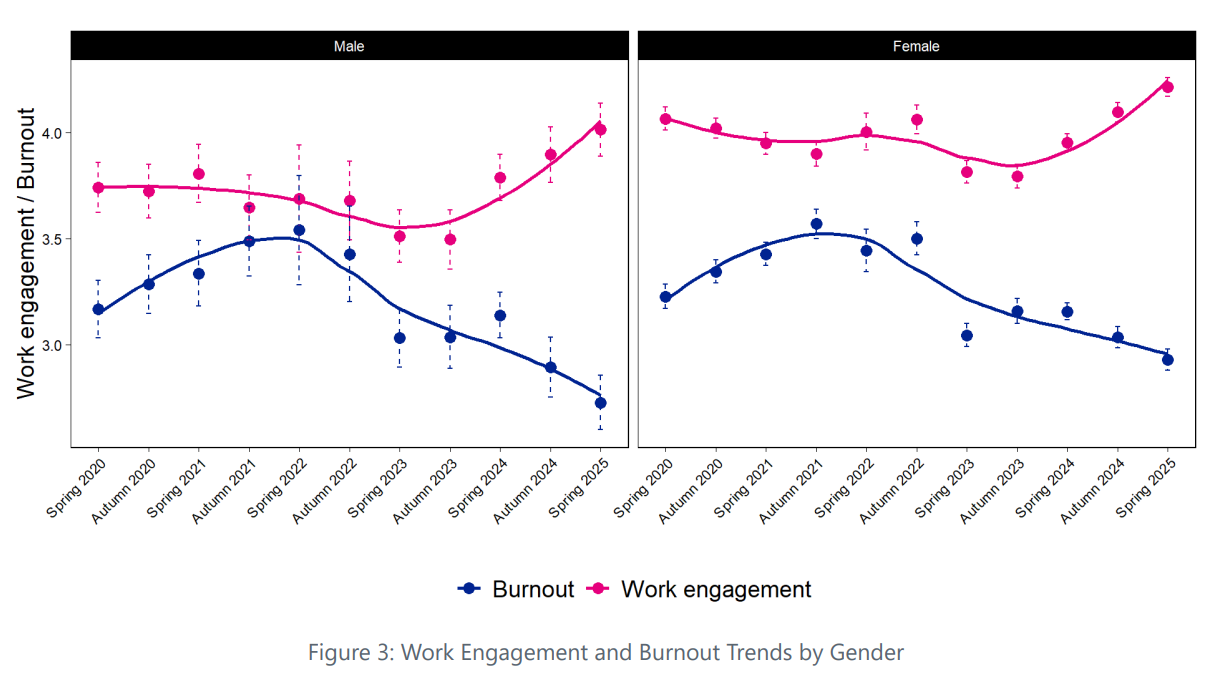
In the figures presented, dots represent average values, bars indicate 95% confidence intervals, and lines illustrate trend developments. Additional information on the measures used is provided at the end of the report.
Descriptive Summary of the Data
Teacher Work Engagement and Burnout 2020- Spring 2025
In research literature, teacher well-being is often described through two central psychological constructs: work engagement and burnout (see, e.g., the Job Demands–Resources model). Work engagement refers to a positive work-related experience characterized by energy, dedication, and absorption in one’s work. Burnout, by contrast, is a negative experience typically marked by exhaustion, cynicism, and feelings of inadequacy.
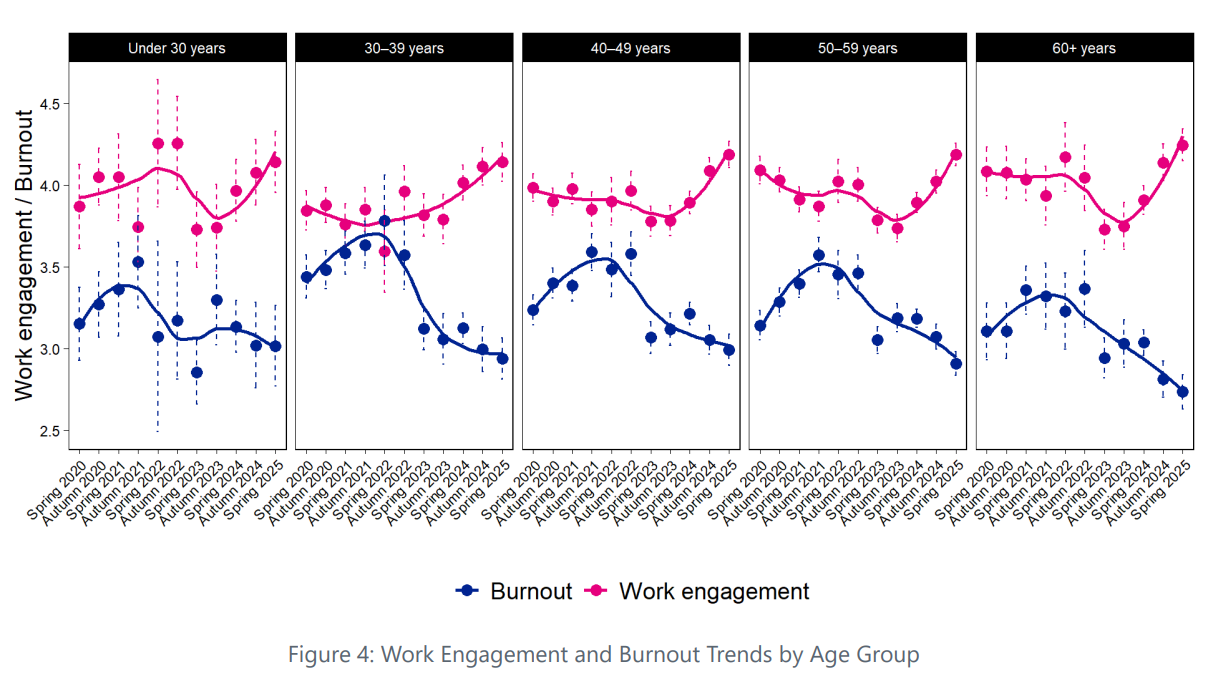
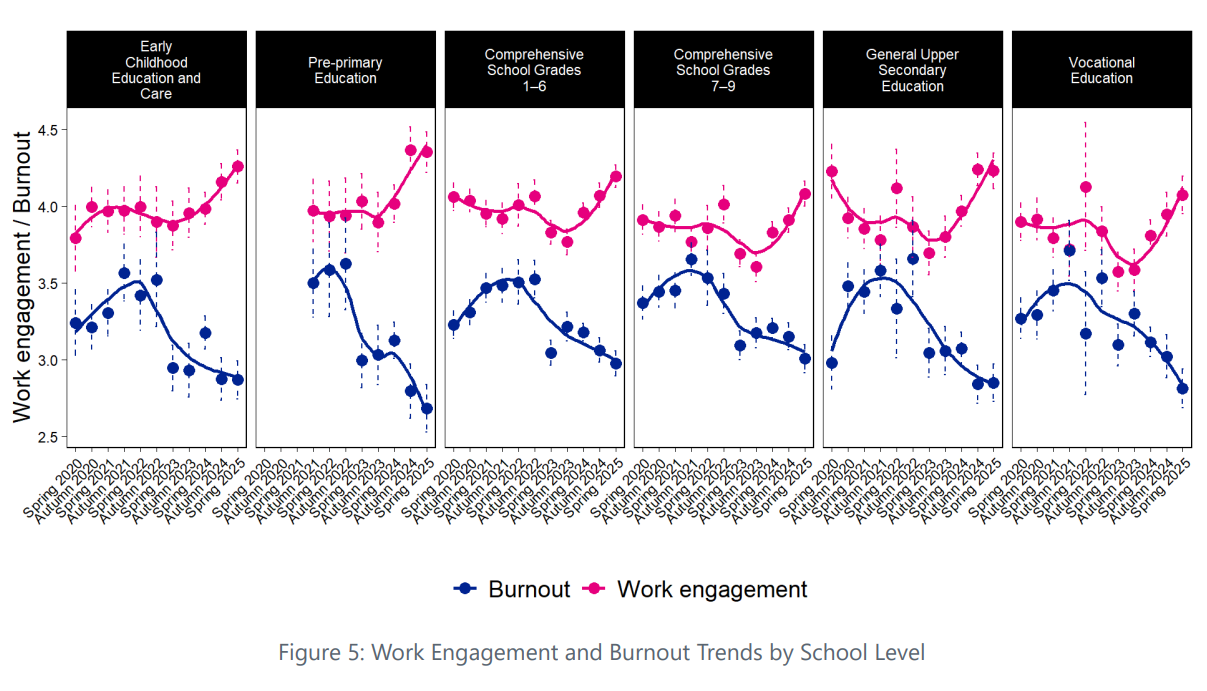
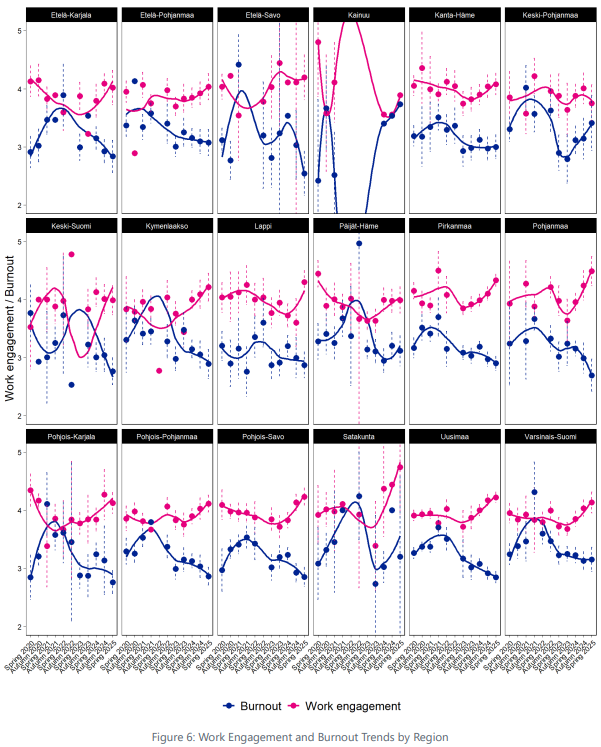
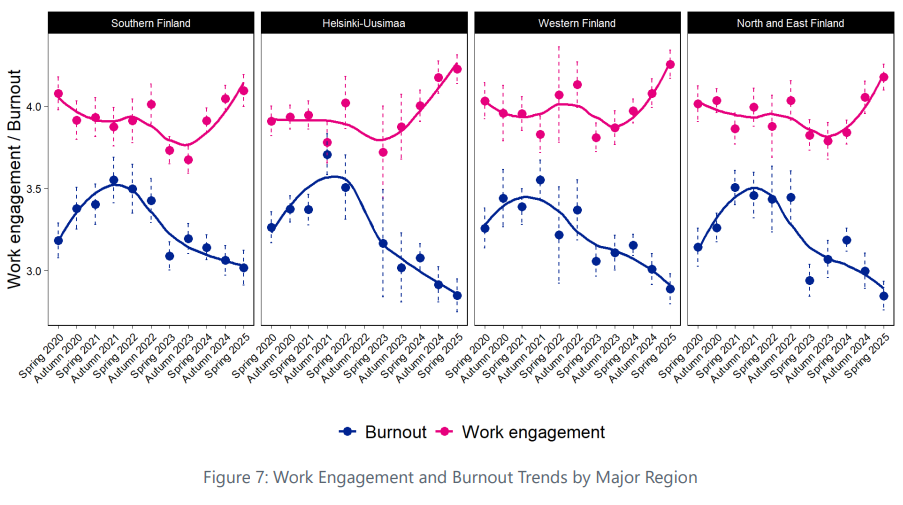
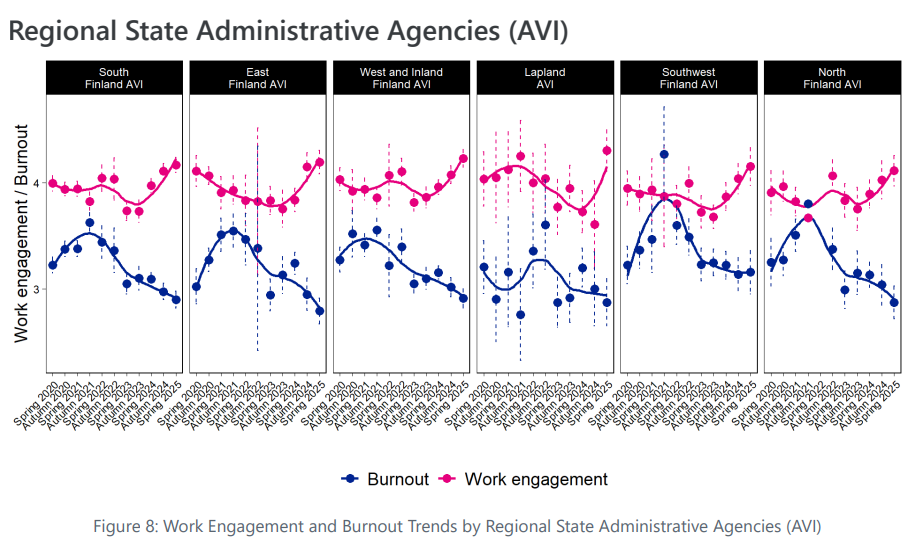
The results clearly reflect the impact of the early stages of the COVID-19 pandemic on teacher occupational well-being. The figure shows that teachers’ experiences of burnout increased steadily during 2020–2021, but have been on a downward trend—especially since spring 2023. This positive development is also visible in Figure 2, which breaks the results by burnout levels. In contrast, a clear upward trend in work engagement did not emerge until spring 2024, after which it has shown a consistent increase.
Work Engagement and Burnout by Background Variables
The following figures present teacher work engagement and burnout results disaggregated by gender (Figure 3), age (Figure 4), school level (Figure 5), and geography (Figures 6–8). Despite some individual differences, the overall trends across these background variables have been largely similar: work engagement has generally increased across different groups, while burnout has declined. Information on the sample sizes and the representativeness of the background variables is available in a separate document.
Age Group Differences in the Time Series
Trends by School Level
Regional Trends Over Time
Regions
Major Regions
Regional State Administrative Agencies (AVI)
Other Occupational Well-Being Factors 2020-Spring 2025
Basic Psychological Needs
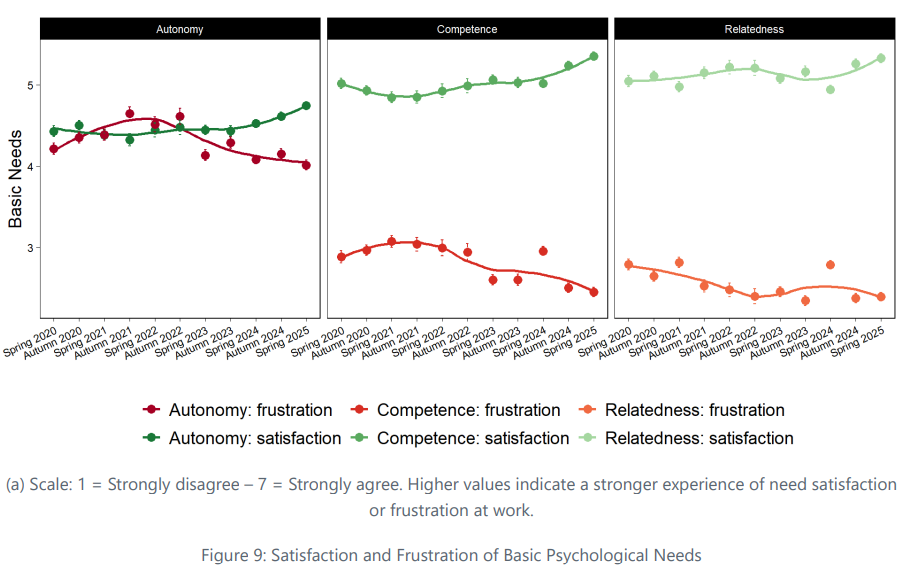
Basic psychological needs refer to three core psychological requirements that are essential for well-being and optimal functioning: the need for autonomy, competence, and relatedness. Autonomy refers to the experience of being able to act according to one’s own values and choices, as well as having influence over one’s work. Competence refers to the feeling of being effective and capable in relation to one’s tasks. Relatedness, in turn, means a sense of connection with others and the feeling of being accepted and valued.
The fulfilment of these needs can be examined from two perspectives: need satisfaction and need frustration. Frustration differs from mere low satisfaction in that it often results from the active thwarting of these needs. Therefore, frustration tends to be more detrimental to occupational well-being than simply low levels of satisfaction.
According to the results, teachers’ psychological need satisfaction has shown an increasing trend over the measurement period. Satisfaction related to competence and relatedness has generally been higher than satisfaction related to autonomy. Frustration concerning competence and relatedness has decreased over time and remained clearly lower than satisfaction throughout the observation period. The exception is frustration related to autonomy, which has remained relatively high over the entire measurement period. During the C OVID-19 pandemic, particularly in 2021 and 2022, the level of autonomy frustration even exceeded that of satisfaction, but has since shown a notable decline.
Recovery, Meaning of Work, and Illegitimate Tasks
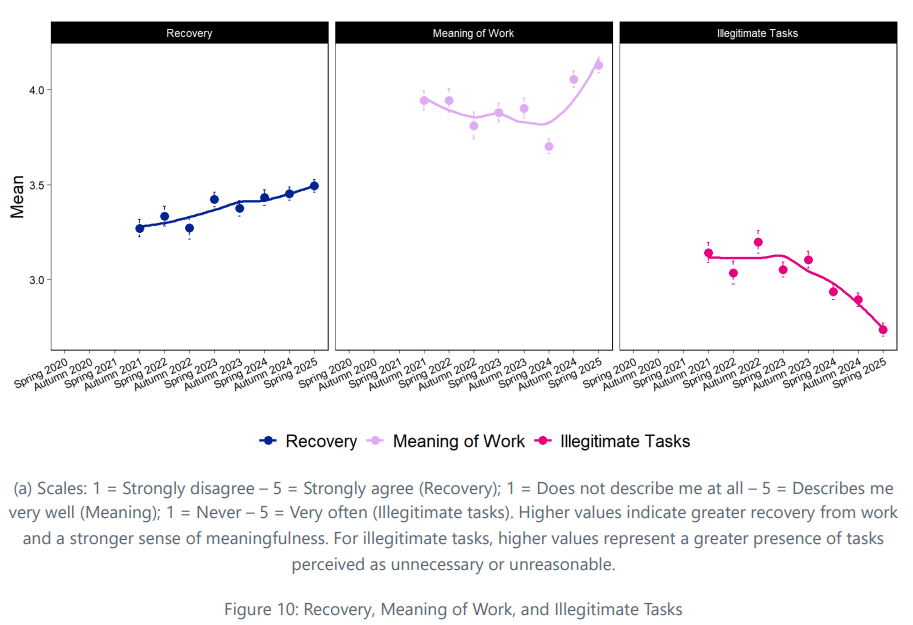
Figure 10 summarizes the results regarding teachers’ experiences of recovery, perceived meaning of work, and illegitimate tasks. These measures have been included in the survey since Autumn 2021.
The questions related to recovery assess how teachers recover during their free time, focusing on four dimensions essential to high-quality recovery: the ability to mentally detach from work-related thoughts and duties, engagement in relaxation and recovery activities, participation in activities that promote a sense of accomplishment (e.g., hobbies), and a sense of control over how one uses their free time. Overall, teachers’ reported recovery has improved during the observation period.
The perceived meaning of work refers to how important and purposeful teachers consider their work to be. The results show some fluctuations across measurement points, but since Autumn 2024, meaningfulness has shown a clear upward trend.
Illegitimate tasks refer to tasks that teachers perceive as either unnecessary or irrelevant to their core work, or tasks that are considered unreasonable or inappropriate given their professional role, expertise, or job description. Such tasks consume resources that could otherwise be directed toward core responsibilities like teaching. According to the results, the experience of illegitimate tasks has decreased since Spring 2024.
Source of Stress: Workload
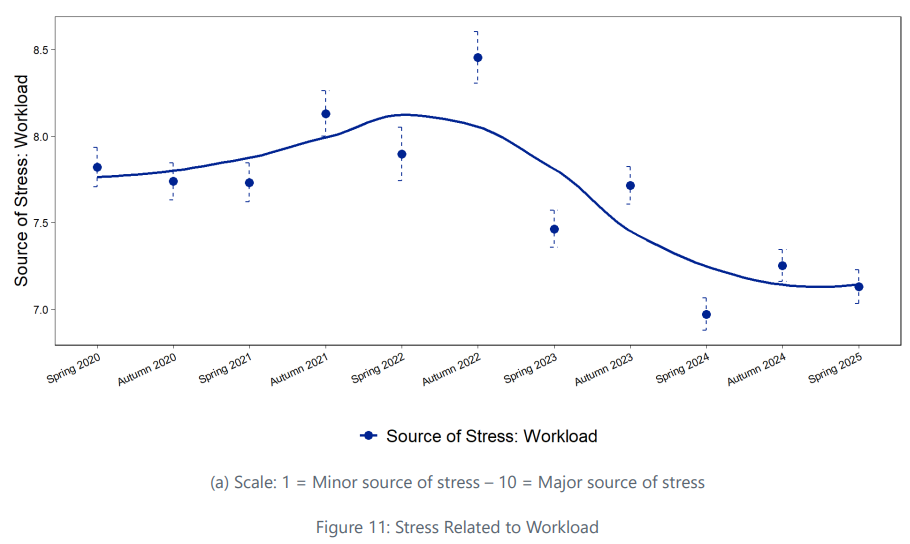
Comparative studies across different professions indicate that work-related stress is often more prevalent in the teaching profession than in many other fields. Workload is one of the most significant sources of this stress. When excessive workload becomes prolonged, it can lead to burnout and diminish work engagement, work quality, and job satisfaction.
According to the results, stress related to workload remained elevated throughout the C OVID-19 pandemic until autumn 2022, after which a downward trend has become apparent.
Turnover intentions
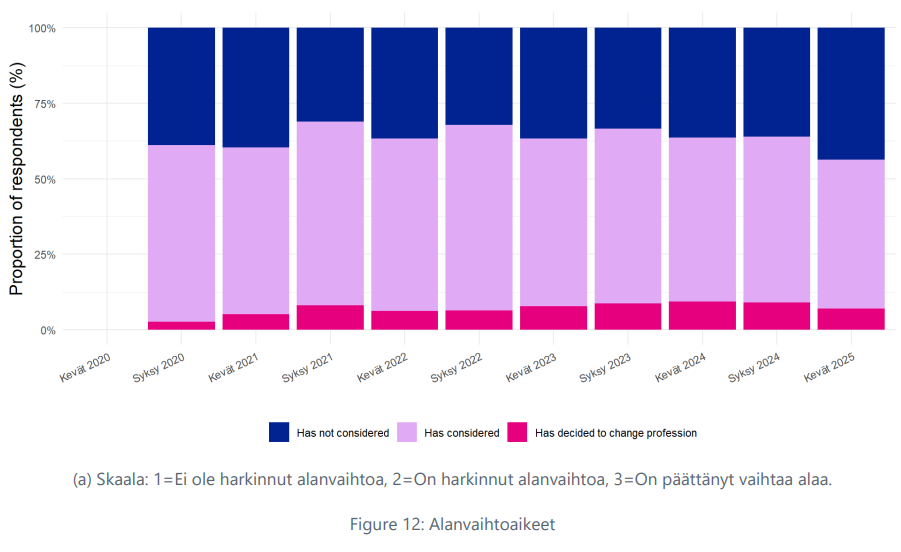
Turnover intentions offer an important perspective on teachers’ occupational well-being and the attractiveness of the entire profession. Based on the results, teachers’ turnover intentions have remained relatively stable throughout the study period. While many teachers report having considered leaving the profession, far fewer seem to have made a decision to do so.
Literature
Work Engagement (EDA9)
Salmela-Aro, K., Upadyaya, K., Ronkainen, I., & Hietajärvi, L. (2022). Opettajien työn imu ja työuupumus koronapandemian aikana. Kasvatus, 53(5). https://doi.org/10.33348/kvt.125525
Salmela-Aro, K., & Upadaya, K. (2012). The Schoolwork Engagement Inventory. European Journal of Psychological Assessment, 28(1), 60–67. https://doi.org/10.1027/1015-5759/a000091
Schaufeli, W. B., Bakker, A. B., & Salanova, M. (2006). The Measurement of Work Engagement With a Short Questionnaire: A Cross-National Study. Educational and Psychological Measurement, 66(4), 701–716. https://doi.org/10.1177/0013164405282471
- Burnout (BBI15)
Salmela-Aro, K., Upadyaya, K., Ronkainen, I., & Hietajärvi, L. (2022). Opettajien työn imu ja työuupumus koronapandemian aikana. Kasvatus, 53(5). https://doi.org/10.33348/kvt.125525
Salmela-Aro, K., Rantanen, J., Hyvönen, K., Tilleman, K., & Feldt, T. (2011). Bergen Burnout Inventory: Reliability and validity among Finnish and Estonian managers. International Archives of Occupational and Environmental Health, 84(6), 635–645. https://doi.org/10.1007/s00420-010-0594-3
- Basic Psychological Needs (BPNSFS)
Chen, B., Vansteenkiste, M., Beyers, W., Boone, L., Deci, E. L., Van der Kaap-Deeder, J., Duriez, B., Lens, W., Matos, L., Mouratidis, A., Ryan, R. M., Sheldon, K. M., Soenens, B., Van Petegem, S., & Verstuyf, J. (2015). Basic psychological need satisfaction, need frustration, and need strength across four cultures. Motivation and Emotion, 39(2), 216–236. https://doi.org/10.1007/s11031-014-9450-1
- Recovery (REQ)
Sonnentag, S., & Fritz, C. (2007). The Recovery Experience Questionnaire: Development and validation of a measure for assessing recuperation and unwinding from work. Journal of Occupational Health Psychology, 12(3), 204–221. https://doi.org/10.1037/1076-8998.12.3.204
- Meaning of Work (WAMI; Positive Meaning Subscale)
Steger, M. F., Dik, B. J., & Duffy, R. D. (2012). Measuring Meaningful Work: The Work and Meaning Inventory (WAMI). Journal of Career Assessment, 20(3), 322–337. https://doi.org/10.1177/1069072711436160
- Illegitimate Tasks (BITS)
Semmer, N. K., Jacobshagen, N., Meier, L. L., Elfering, A., Beehr, T. A., Kälin, W., & Tschan, F. (2015). Illegitimate tasks as a source of work stress. Work & Stress, 29(1), 32–56. https://doi.org/10.1080/02678373.2014.1003996
- Job Demands–Resources Model, see e.g.:
Demerouti, E., Bakker, A. B., Nachreiner, F., & Schaufeli, W. B. (2001). The job demands-resources model of burnout. The Journal of Applied Psychology, 86(3), 499–512.
Granziera, H., Collie, R., & Martin, A. (2021). Understanding Teacher Wellbeing Through Job Demands- Resources Theory. In C. F. Mansfield (Ed.), Cultivating Teacher Resilience (pp. 229–244). Springer Singapore. https://doi.org/10.1007/978-981-15-5963-1_14
Hakanen, J. J., Bakker, A. B., & Schaufeli, W. B. (2006). Burnout and work engagement among teachers. Journal of School Psychology, 43(6), 495–513. https://doi.org/10.1016/j.jsp.2005.11.001