
Summer School & Mini-Conference brought together nearly 150 researchers in Jyväskylä
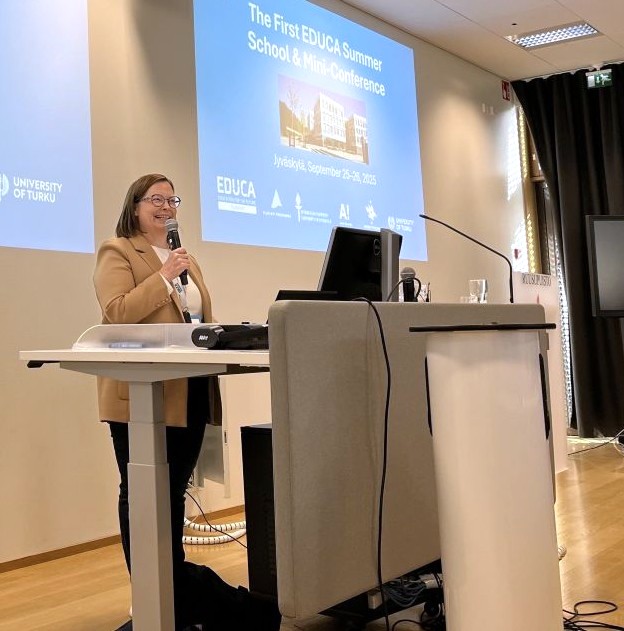
Professor Marja-Kristiina Lerkkanen
The Summer School and mini-conference officially began on Thursday, September 25, after lunch. Earlier that morning, EDUCA-Doc and EDUCA doctoral students had already participated in a workshop on research ethics.
The flagship director, professor Marja-Kristiina Lerkkanen, welcomed in her opening words everyone to network and learn about the research being conducted on the flagship.
After this, the event continued with a moment of silence in memory of the late EDUCA vice director, Academy Professor Katariina Salmela-Aro.
After this, the Finnish Minister of Education Anders Adlercreutz honored the event with a video greeting. Also Kaisa Miettinen, Vice Rector of the University of Jyväskylä, welcomed the large group of researchers to Jyväskylä, the "spiritual home" of Finnish-language teacher training.
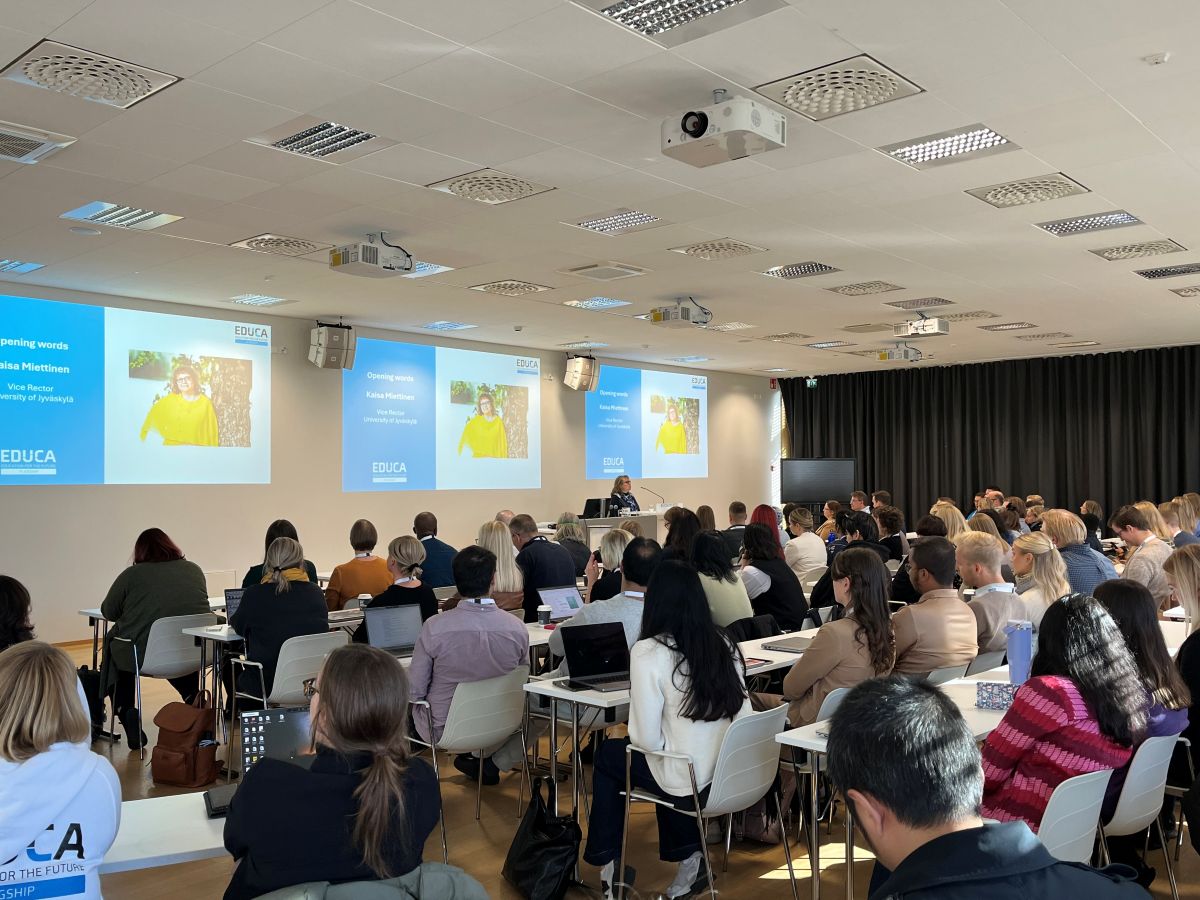
"The goals of EDUCA Flagship resonate perfectly with the history of our university. I hope you are proud to be part of this, Europe's largest educational research cluster. Also EDUCA-Doc has gotten off to a great start and even exceeded expectations", said Kaisa Miettinen, Vice Rector of the University of Jyväskylä.
The keynote lecture on the first day was given by Lars-Erik Malmberg, Professor at Oxford University, who specializes in quantitative methods in education. On the same day, the University of Jyväskylä announced that Malmberg will be awarded an honorary doctorate in the Faculty of Education and Psychology next spring. Malmberg's interests relate to understanding and modeling individual development processes.
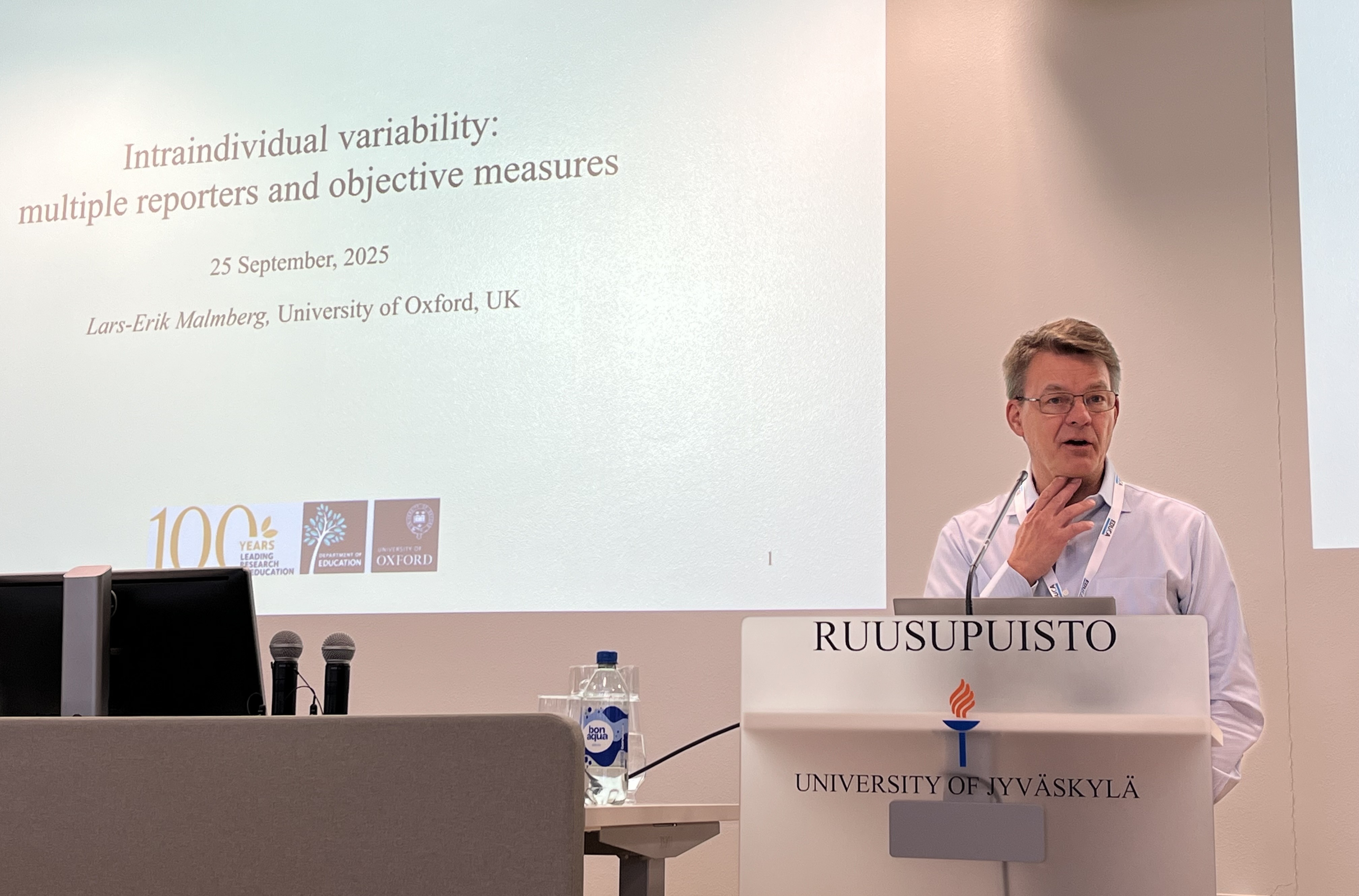
Lars-Erik Malmberg's lecture, which focused on research methodology, was entitled "Intraindividual variability."
In the afternoon, there were seven different paper sessions, which participants attended according to their own interests. The sessions covered the flagship research areas comprehensively. The presenters described their data, methods, and preliminary results, after which they engaged in discussion with the audience.
In the evening, conference guests had the opportunity to attend the City of Light event held in Jyväskylä at the same time, which got many people out and about on the darkening autumn evening.
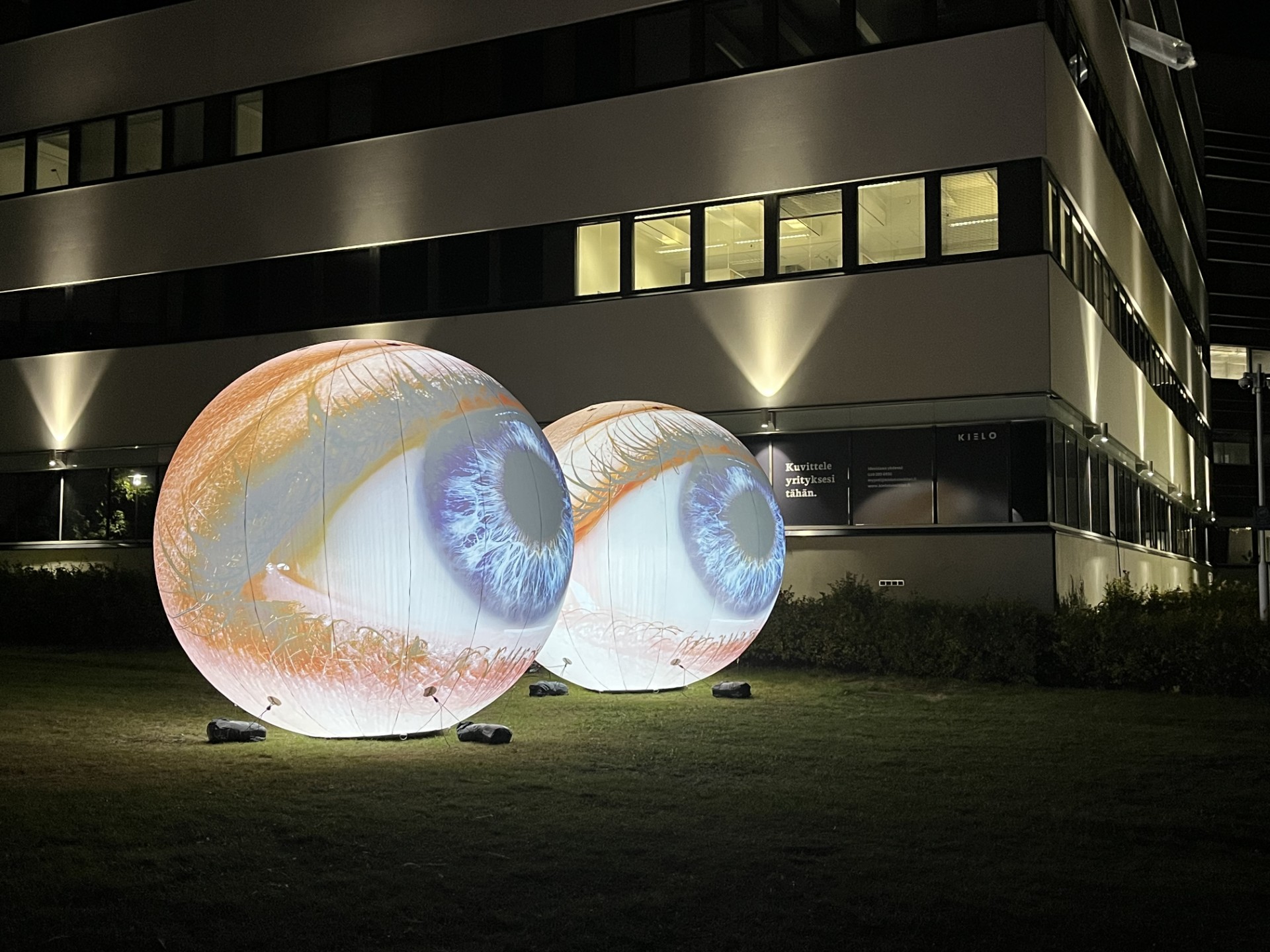
OCULUCIS light art installation in Mattilanniemi Park.
The next morning, the paper sessions continued, followed by a lecture by the second keynote speaker, Professor Mutlu Cukurova (University College London). He studies human-AI complementarity in education).
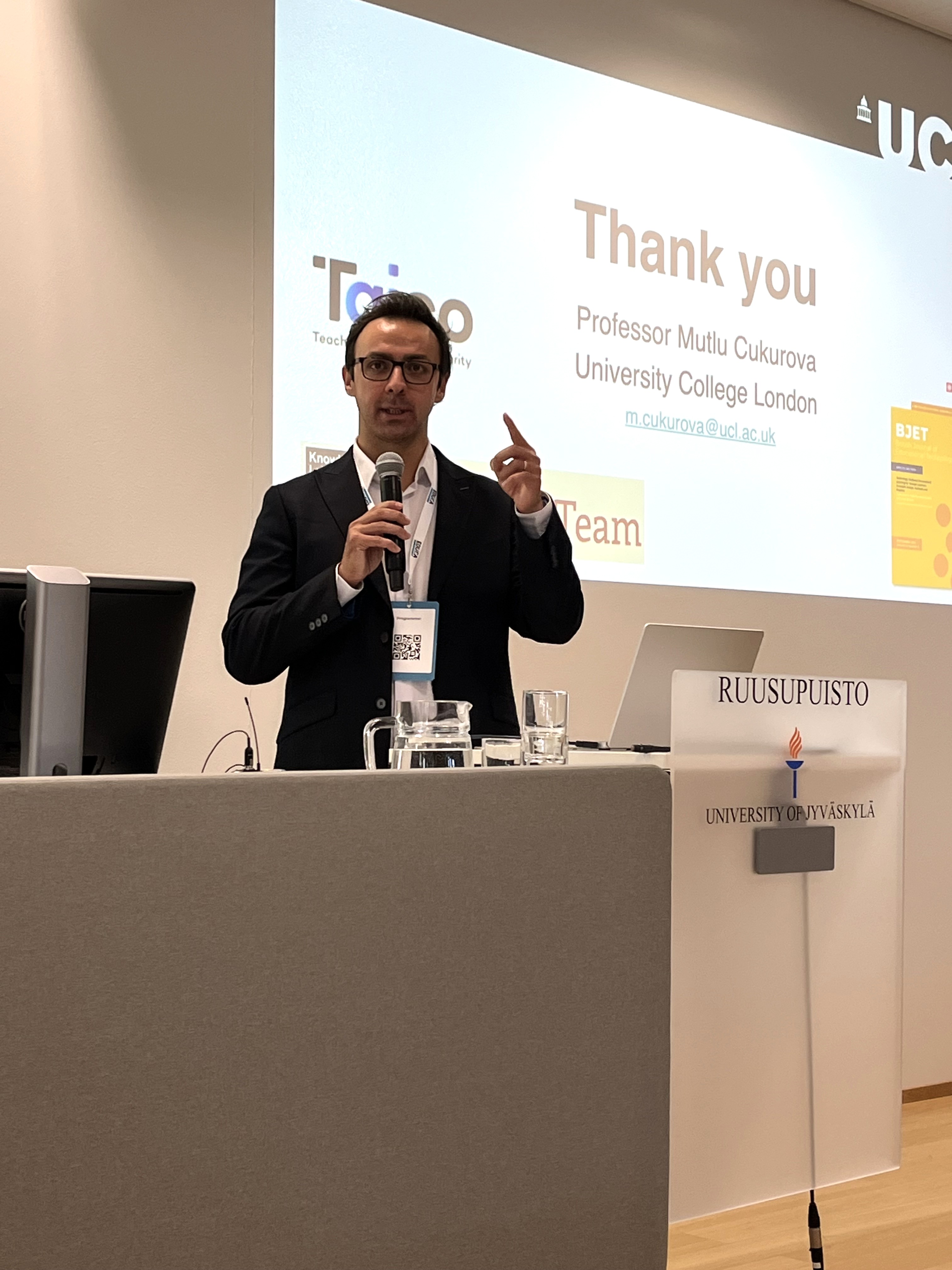
Professor Mutlu Cukurova is listed in Stanford's Top 2% Scientists list.
In his keynote speech, he emphasized the potential of artificial intelligence in schools, but also raised concerns that commercial AI tools produce and reinforce gender-bias.
"This affects users' perceptions of themselves, and the issue needs to be studied further and taken into account before artificial intelligence is widely adopted in education," Cukurova said and encouraged researchers to build non-commercial AI models for schools.
The second day's program also included poster presentations and, last but not least, a panel discussion entitled "Future challenges in Finnish education." The topic was chaired by Research professor Taina Saarinen and discussed by Professor of Practice Pia Kola-Torvinen from the University of Turku, Professor Mutlu Cukurova, and Postdoctoral Researcher Saija Volmari from the University of Jyväskylä.
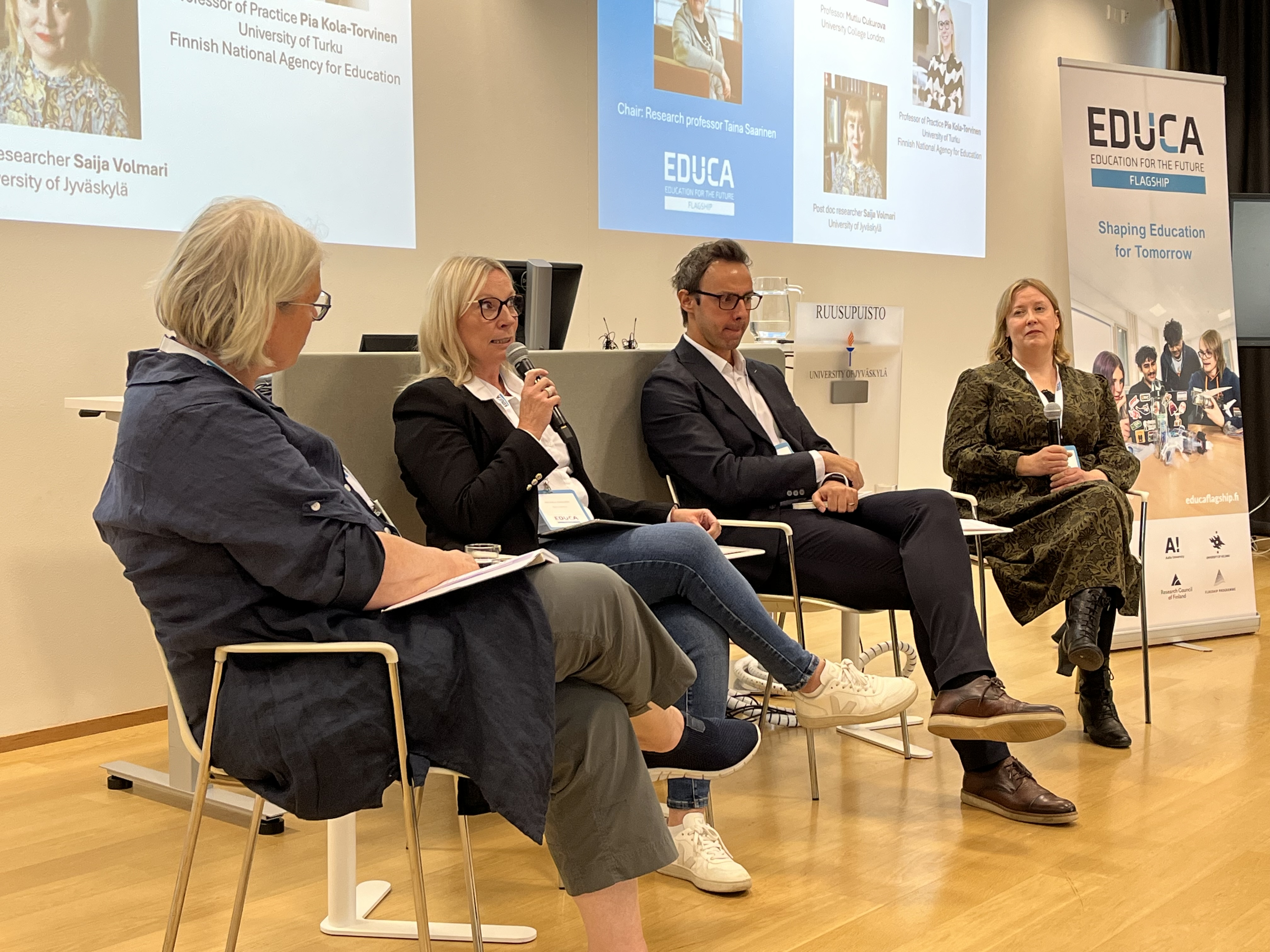
At the end of the conference, Taina Saarinen, Pia Kola-Torvinen, Mutlu Cukurova, and Saija Volmari had time to engage in an in-depth discussion about the future of education.
The panelists raised their concerns and proposed solutions, such as genuinely listening to children and young people in educational policy-making, agile experimentation instead of major reforms, and increasing the diversity of teachers and strengthening their agency.
After the event, the keynote speakers greeted EDUCA with the following words.
"It was a pleasure to be part of many discussions! I saw so many interesting research studies going on which will indeed shape the future of education in Finland and beyond", said Mutlu Cukurova.
Professor Lars-Erik Malmberg was of the same opinion. "I had the opportunity to meet researchers for example in the field of learning analytics and heard about the ViLLE learning system, which was very interesting. And of course, it was nice to chat with old friends," said Malmberg, who was born in Finland.
He particularly praised the presentations by doctoral researchers.
"The poster and paper presentations were of high quality, and the researchers were also good at presenting them. Overall, the quality of research in educational sciences and psychology in Finland is very high by international standards."
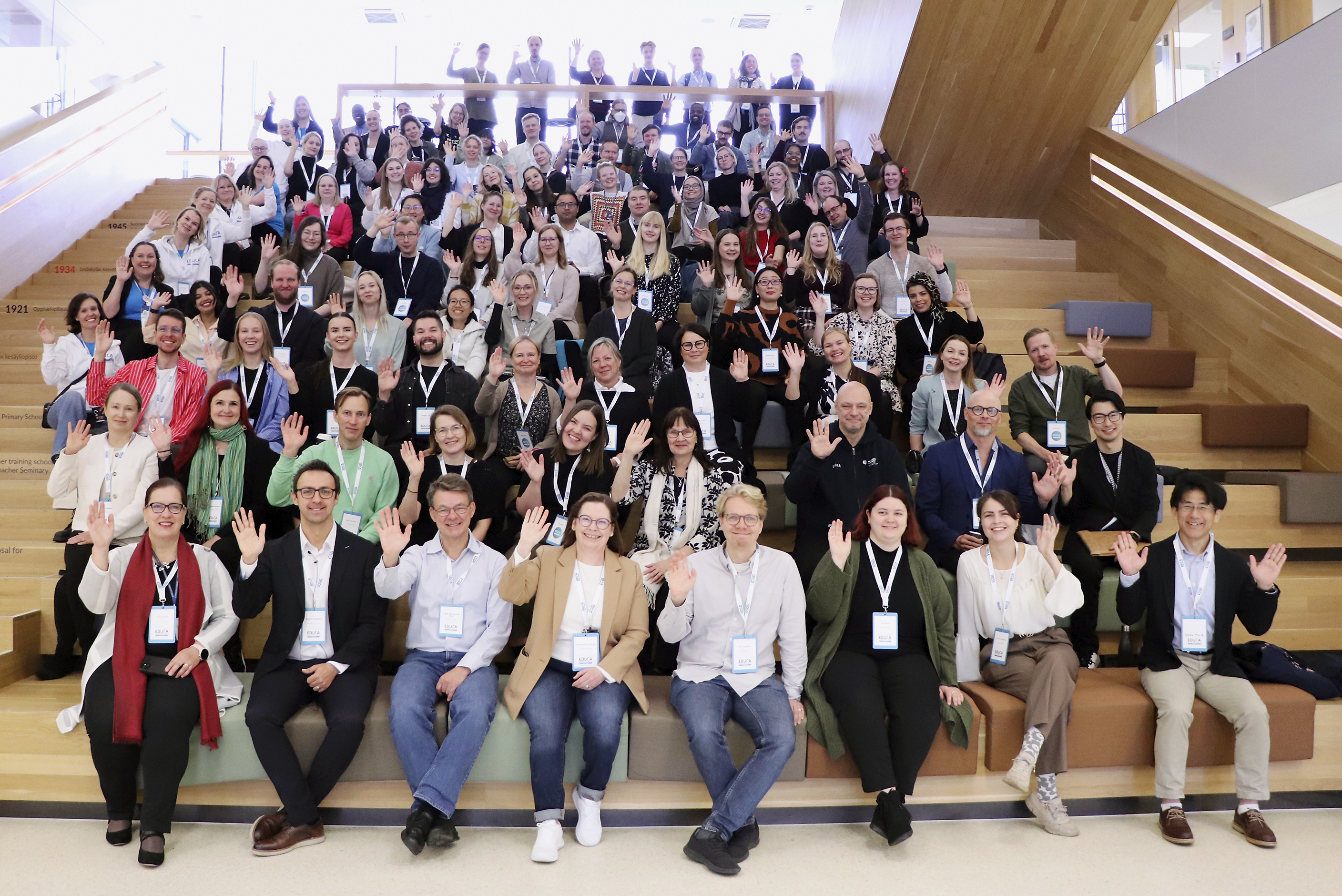
Thank you to all the participants! See you all again with such a large group in Espoo in May 2026!