
How to support reading if your child has difficulty reading or if Finnish is not their first language
If reading is difficult for a child or Finnish is not their native language, support from home is especially important. Working with the child’s school can help identify the right ways to practice, and even short but regular reading sessions, along with rewards for progress, will help improve skills. Adults’ encouraging attitude, reading together in a relaxed atmosphere, and choosing suitable material for the child all promote both reading fluency and comprehension. For children whose first language is not Finnish, proficiency in their first language supports the learning of a new language. Nurturing that proficiency is an important part of developing their Finnish language skills.
It is estimated that about one in five (20%) children has some form of reading difficulty. These difficulties may appear as follows:
- Learning to read is slow.
- Slow and laborious reading, even after several years of practice.
- Difficulty in reading comprehension.
Some children have difficulty reading only during their first years of school, while for others the difficulties do not emerge until later, for example in lower secondary school, and for some the difficulties are extensive and long-lasting. Reading may also be difficult if Finnish is not the child’s first language.

Cooperation with the school is especially important when there are challenges related to reading. The child’s teachers can explain in more detail which specific skills are causing difficulties, how those skills are being supported at school, and how the child’s skills can be supported at home. Challenges in reading and writing skills can sometimes seem overwhelming and abstract. Mutually agreed approaches help break down practice into manageable parts, which supports the development of the child’s skills.
This page brings together tips on various approaches that can be used when reading at home. Many of these tips are useful when a child has difficulty with reading and writing, but also when Finnish is not the child’s first language. At the bottom of the page, we’ve gathered some tips specifically for families whose first language is not Finnish.
Practicing reading fluency
Most children learn to read accurately in Finnish during their first couple of years of school, because each letter always corresponds to the same sound. Difficulties with accuracy are most common when reading long words, with sound durations (e.g., kuka/kukka, lava/laava), or with the eng sound (kenkä/kengät).
A key challenge in third grade is often slow reading, which can make it difficult for a child to understand the text they are reading. When practising reading, it is still important to support the development of accurate and sufficiently fluent reading skills.
Reading accuracy and speed are assessed at school through various assessment tasks. At home you can, for example, check whether your child can read at least as fast as they speak or follow along with the subtitles on TV shows. In addition to accurate and fluent reading, it is also important to focus on text comprehension.
Ways to support reading fluency:
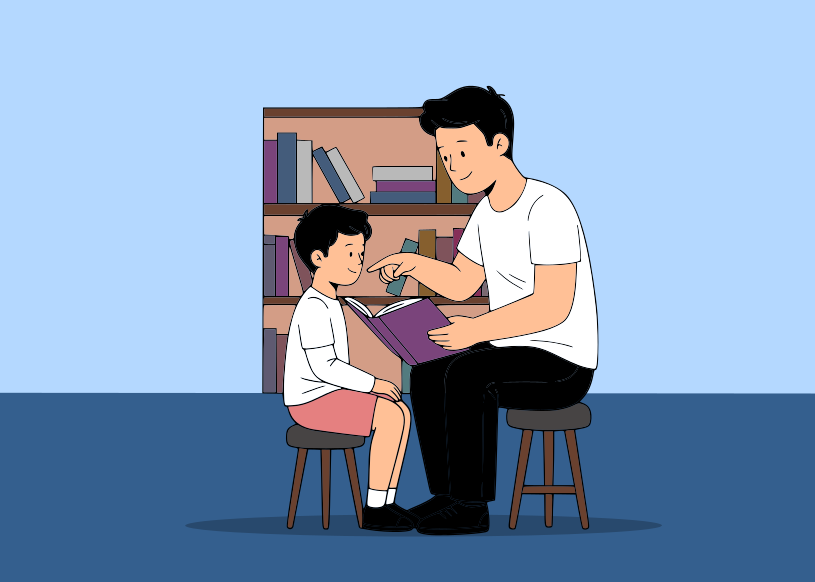
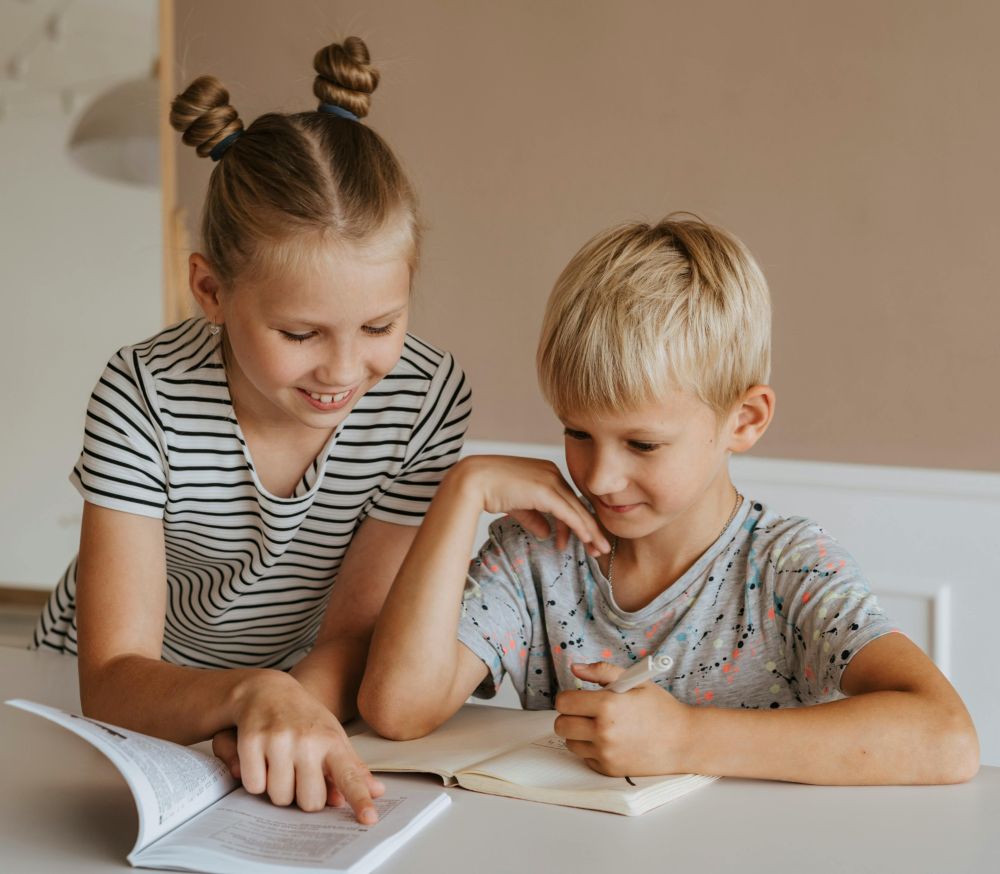
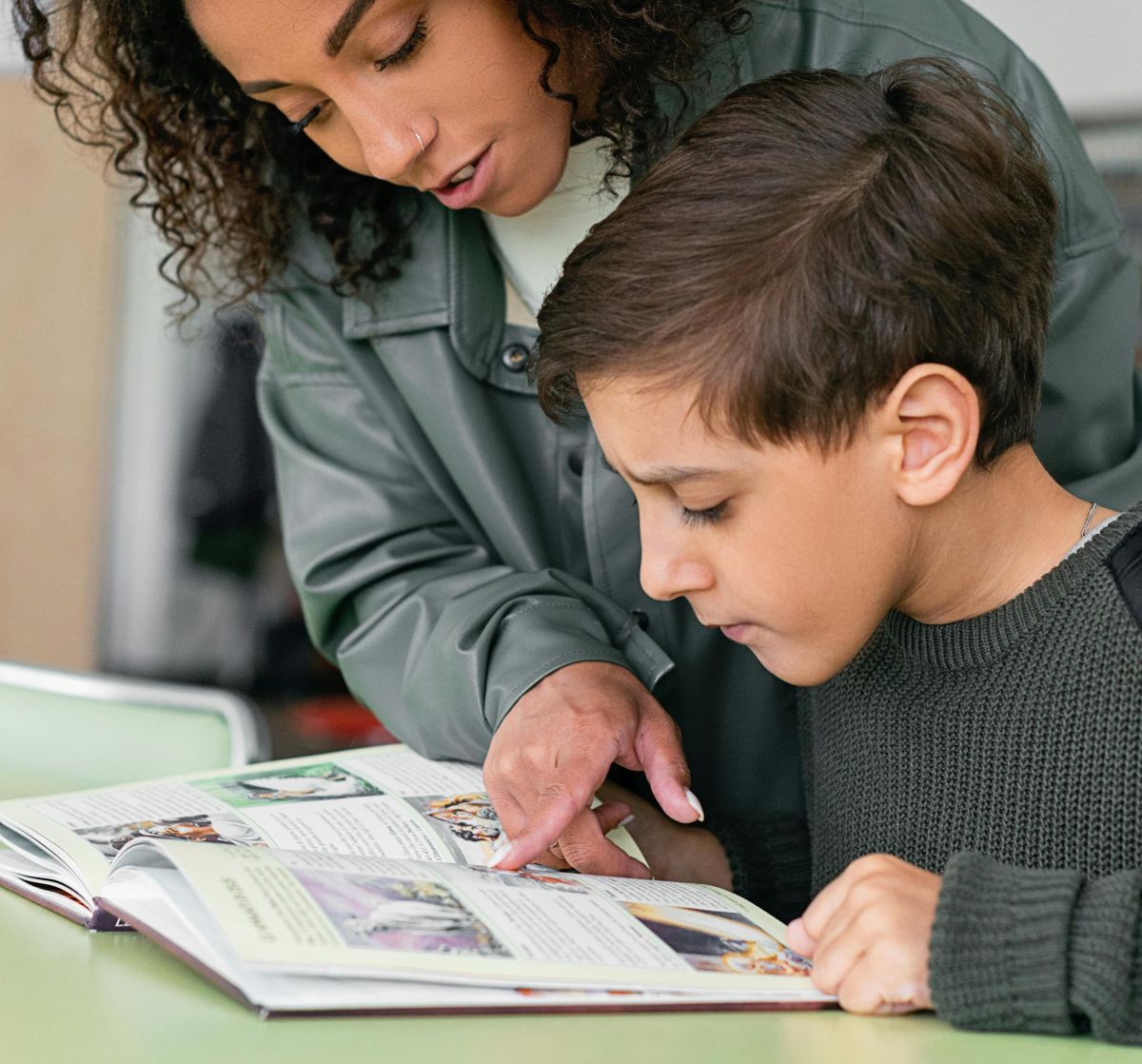
Reading aloud with an adult or older sibling, for example. If reading is difficult, it is a good idea to continue reading aloud even with slightly older children.
- Take turns reading: you can read one sentence at a time, for example, or a longer passage. If reading is very challenging, the child can just read individual, simple words.
- Read the text aloud together. A more experienced reader helps the child get through the more difficult parts and sets the pace so that the reading flows a little more smoothly than when the child reads alone.
- Read the same text multiple times. Learning to read fluently requires repetition. Through repetition, reading gradually becomes easier, it becomes easier to spot mistakes, and the content of the text becomes more familiar.
- If your child is practicing syllables or words, you can make it into a race and see if their time improves after several practice laps. You can use a toy car to indicate which syllable or word you’re on.
- Some children benefit from competing against themselves. You can do one of the following:
- Keep track of how long it takes you to read a particular text at various times, for example, three times in a row or on several consecutive days.
- Count how many words your child can read in a given amount of time, such as one or two minutes.
- When your child competes against their previous results, it makes visible the effects of their practice and the development of their reading fluency.
- As you read the text, try voicing different characters or expressing different emotions in a playful way. Expressive reading helps with pacing and understanding the text.
- Take a look at the text before reading it. Are there any really long words in the text? Read the long words before reading the whole text.
Reading aloud on their own may feel boring to your child. If that’s the case, try the following:
- Reading to a younger child, such as a sibling or a neighbor’s child.
- Reading to a pet or a toy.
- Reading to the dog in the Luppakorva app. See Supporting and rewarding practice below.
Listening to the text before or when you read

- Reading a familiar text that your child has already listened to once can help them pay more attention to the content as well. This helps both with comprehension and with noticing and correcting any mistakes in reading.
- Listening to the text while reading it helps improve reading fluency and pacing. It allows you to hear the effect of punctuation, such as commas and periods, on the text.
- Accessibility Library Celia has a wide selection of books that your child can listen to while following the text. Celia’s services are free of charge, but require identification of the need for support and registration for the service through a special education teacher or library staff.
- Find out if the texts in your child’s schoolbooks are also available in audio format. They can be used both for reading practice and, more generally, to support learning, especially if your child learns better by listening.
- However, in order to stimulate an interest in reading, it is also important to “take it easy” and simply let your child enjoy listening to the text read by someone close to them, without requiring them to read it themselves. Bedtime stories are always a great option for this.
Supporting reading comprehension
Difficulties with reading comprehension may be due to slow reading, language-related difficulties such as limited vocabulary or difficulties with linguistic comprehension, or both. Schools may teach certain methods to support text comprehension. Whenever possible, it would be good to use the same methods at home so that your child becomes familiar with them.
You can also practice comprehension at home through engaging in various discussions.
- Stop when you come across difficult words and think about their meanings. Do words have more than one meaning? For example the word kuusi can mean both “tree” and the number 6.
- Ask questions about the text
- Pause after 1 or 2 sentences and check to see if your child understands by asking the following questions, for example:
- What does this word mean?
- Who is this character?
- What happened? Who did it?
- After reading the whole text
- Did your child understand the plot?
- Did the text have a specific meaning or message that the author intended to convey to the reader?
- Do you know more about the topic?
- When reading is difficult, prior knowledge of the topic helps your child to understand the text. Your child’s learning at school can also be supported by reading the text to be covered in class beforehand at home with a parent.
Reading materials suitable for improving reading skills

Enjoyable reading materials are important for all children, but especially for those who struggle with reading. The topics of the books should be such that your child can stay focused on them, even if reading requires some effort. The texts should generally be appropriate for your child’s reading skill level, but occasionally you can also choose texts that are clearly easier (“This is easy for me!”), or slightly more challenging (“I can do this too!”).
- Take advantage of library services to find books that appeal to your child and match their reading level. Books can also be purchased at a low cost, for example at flea markets, or you can swap books with other families.
- In addition to easy-to-read children’s books, be sure to check out the selection of easy language books at your local library, as well as combination books (audio and text) available through Celia’s services.
- Make use of the illustrations in books and comics: how do the images relate to the text?
- In addition, the short jokes in joke books, for example, are entertaining to read and provide opportunities for shared fun while reading.
Supporting and rewarding practice

When reading is difficult, it can be challenging to find enjoyment and interest in reading. In such situations, it is important to provide encouragement and positive feedback for your child's practice and to celebrate their successes.
- Decide on times for regular practice. Try starting with 10 minutes and, if possible, gradually increase the length of your reading sessions.
- Make practice visible.
- What is your child’s favorite way to practice? Decide whether you want to track your progress using the number of practice sessions or the amount of work done.
- You can keep track of your progress, for example, by coloring in the squares of a grid notebook or by collecting beads in a jar based on the number of practice sessions, or perhaps the number of pages or words read.
- Also, decide on a bigger reward to be awarded at regular intervals. Instead of material rewards, this could be something like spending time together as a family, for example playing games or watching a movie.
- Remember to celebrate even the smallest successes!
Parents’ own relationship with reading and their support for the child
Reading may not necessarily feel natural to all parents, or they may themselves have difficulty reading, which is why it can be hard to incorporate reading into the family’s daily routine. Acknowledging this can make things easier: “I may not be the most enthusiastic or skilled reader myself, but I can still support my child in becoming a reader.”
It’s also important to remember that parents don’t need to be their children’s teachers, but rather that encouragement and support when facing a difficult situation are what matter most. When adults believe in a child’s ability to develop, it has such a profound impact that the child remembers it even as an adult.
When Finnish is not your child’s first language
Learning a new language is a complex process influenced by factors such as:
- Age
- Proficiency in one’s first language
- Individual ability to learn languages
- Prior reading skills
- Similarities or differences between one’s first language and the language being learned
- Opportunities to use the language in different situations
Language proficiency requirements also vary depending on whether the language is used, for example, during free time, when shopping, or at school. This section focuses specifically on practices that support the development of the reading skills needed at school and in working life.
- Remember your first language!
- Proficiency in one’s first language also supports the process of learning to read in a second language. Can you find something to read in your first language?
- Have a look at the multilingual services of the HELMET libraries: https://helmet.finna.fi/Content/monikieliset-palvelut
- Is the same book available in both your first language and Finnish? Reading a text in your own language can also help you understand the Finnish text.
- Language awareness can be developed, for example, by comparing languages with each other: How would you say this in your first language? How about in Finnish?
- Are these challenges related to associating Finnish sounds with letters?
- Languages differ in terms of pronunciation and spelling.
- The free game Ekapeli Maahanmuuttaja (https://www.lukimat.fi/lukeminen/materiaalit/ekapeli/ekapeli-maahanmuuttaja.html) helps with learning letter–sound associations.
- The game takes the child’s first language into account and focuses specifically on sounds that are difficult.
- The game’s content has been adapted to seven languages.
- Are the challenges evident at the word level?
- There’s no need to stop at every unfamiliar word. The most important thing is to try to understand the main point.
- Guide and help your child figure out the meanings of words and identify the basic forms of inflected words.
- Talk about the meanings of the new words: collect new words together and practice remembering them. You can make flashcards of the words and practice them by playing games like Alias or memory games with the cards.
- It is also important to tolerate uncertainty. Occasional mistakes are part of practice and learning.
- Are the challenges evident when reading sentences?
- Sentences in written language are different from those in spoken language.
- After a long or complex sentence, it’s a good idea to stop and ask your child to explain in their own words, in Finnish or their first language, what the sentence is about.
- Is reading longer texts challenging?
- Encourage the child to describe in their own words or in their first language how the story unfolded or what the text was about. What did they think about it? Who was their favourite character? What did they find funny/strange/interesting?
- Also see the tips in section Supporting reading comprehension.
- What is your own level in Finnish?
- Easy language books and news are available for both children and adults. They feature clear text and simple words and sentences. https://selkokeskus.fi/selkokirjallisuus/
- In addition, picture books, comic books, news for children, and so on can be used as reading material. The most important thing is to find something to read that is interesting.

This website was created in spring 2026 as part of the study Comics as a Gateway to Reading.
Authors: postdoctoral researcher Jenni Ruotsalainen, doctoral researcher Emmi Ulvinen, doctoral researcher Aada Saatsi, Professor Minna Torppa, and the research group of the CRITICAL project.